
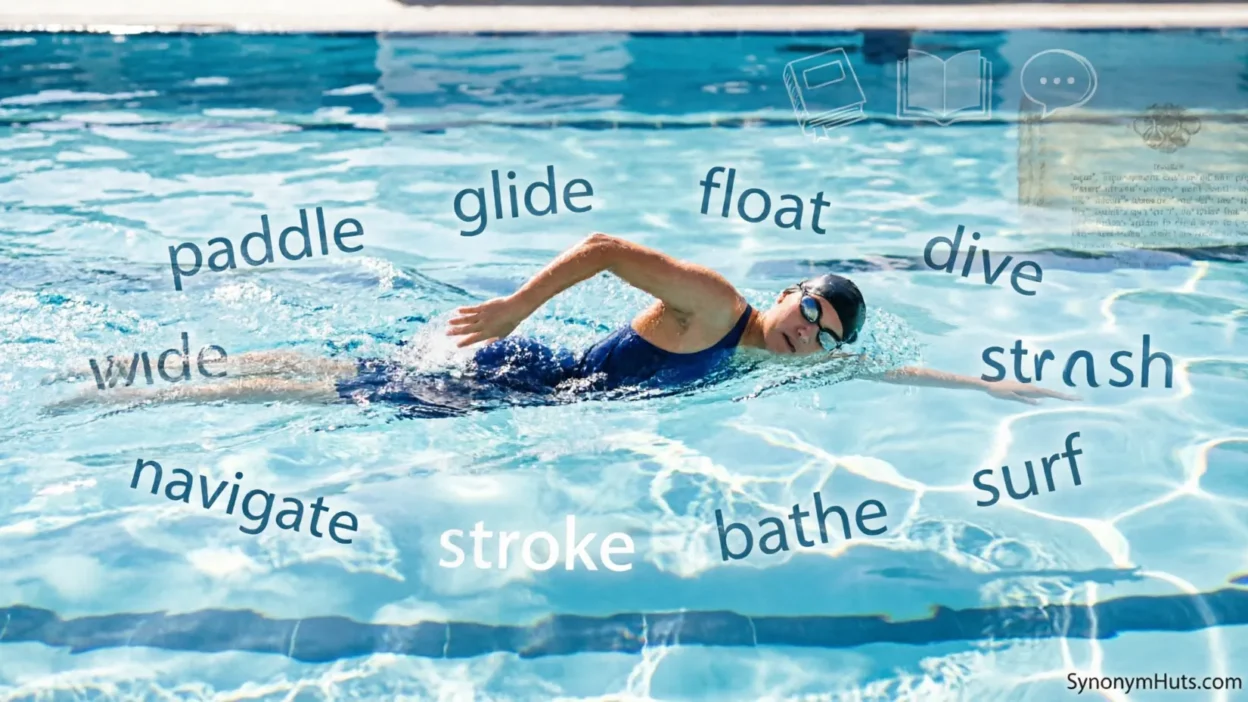
The phrase synonyms for swim refers to words that have a similar meaning to swim but may fit different situations, writing styles, or tones. Learning these alternatives helps you express ideas more clearly and avoid repeating the same word.
Whether you’re a student, ESL learner, writer, or content creator, knowing different ways to say swim can improve your vocabulary and make your writing more natural. Some synonyms describe casual movement in water, while others suggest floating, diving, or moving gracefully.
In this guide, you’ll learn the meaning of swim, explore 30 useful synonyms, see easy examples, and discover when each word is the best choice.
What Does “Swim” Mean?
Simple Meaning
Swim means to move through water using your arms, legs, or body. It can refer to people, animals, or even objects moving in water.
Usage Context
The word swim is commonly used when talking about:
- Sports and exercise
- Recreation
- Nature and animals
- Survival
- Literature and storytelling
Example:
- She loves to swim every morning before work.
- Fish swim effortlessly through the river.
30 Synonyms for Swim
1. Paddle
Meaning: Move through water using short strokes.
Example: The children paddled near the shore.
Best Usage Context: Casual swimming in shallow water.
2. Float
Meaning: Stay on the surface of the water.
Example: We floated peacefully in the lake.
Best Usage Context: Relaxing on water.
3. Glide
Meaning: Move smoothly and effortlessly.
Example: The swan glided across the pond.
Best Usage Context: Graceful movement.
4. Drift
Meaning: Move slowly with the water current.
Example: The boat drifted downstream.
Best Usage Context: Passive movement.
5. Dive
Meaning: Go quickly beneath the water.
Example: He dived into the pool.
Best Usage Context: Entering deep water.
6. Splash
Meaning: Move around while throwing water.
Example: Kids splashed happily in the pool.
Best Usage Context: Fun and play.
7. Wade
Meaning: Walk through shallow water.
Example: They waded across the stream.
Best Usage Context: Shallow rivers or beaches.
8. Navigate
Meaning: Find a path through water.
Example: Sailors navigated the rough sea.
Best Usage Context: Boats and sea travel.
9. Sail
Meaning: Travel over water in a boat.
Example: They sailed across the lake.
Best Usage Context: Water transportation.
10. Row
Meaning: Move a boat using oars.
Example: We rowed to the island.
Best Usage Context: Small boats.
11. Cruise
Meaning: Travel smoothly on water.
Example: The yacht cruised along the coast.
Best Usage Context: Leisure travel.
12. Surf
Meaning: Ride waves on a surfboard.
Example: She surfed all afternoon.
Best Usage Context: Ocean sports.
13. Dip
Meaning: Go briefly into water.
Example: We dipped our feet in the river.
Best Usage Context: Short water contact.
14. Immerse
Meaning: Put completely under water.
Example: She immersed herself in the cool lake.
Best Usage Context: Formal writing.
15. Submerge
Meaning: Go below the surface.
Example: The submarine submerged quietly.
Best Usage Context: Technical or scientific writing.
16. Plunge
Meaning: Jump forcefully into water.
Example: He plunged into the sea.
Best Usage Context: Dramatic action.
17. Soak
Meaning: Stay in water for a while.
Example: They soaked in the hot spring.
Best Usage Context: Relaxation.
18. Bathe
Meaning: Wash the body in water.
Example: She bathed in the river.
Best Usage Context: Cleaning or relaxation.
19. Tread Water
Meaning: Stay upright by moving your arms and legs.
Example: He treaded water while waiting for help.
Best Usage Context: Swimming safety.
20. Dog Paddle
Meaning: A simple swimming technique.
Example: The beginner used the dog paddle.
Best Usage Context: Learning to swim.
21. Frolic
Meaning: Play happily in water.
Example: Dolphins frolicked in the waves.
Best Usage Context: Fun activities.
22. Meander
Meaning: Move slowly without a fixed direction.
Example: The ducks meandered across the pond.
Best Usage Context: Calm movement.
23. Coast
Meaning: Move with little effort.
Example: He coasted through the calm water.
Best Usage Context: Relaxed swimming.
24. Skim
Meaning: Move lightly across the surface.
Example: The bird skimmed the water.
Best Usage Context: Surface movement.
25. Sweep
Meaning: Move smoothly through water.
Example: The whale swept through the ocean.
Best Usage Context: Large graceful movements.
26. Stream
Meaning: Move continuously like flowing water.
Example: Fish streamed upstream.
Best Usage Context: Nature writing.
27. Propel
Meaning: Push yourself forward.
Example: Strong kicks propelled her ahead.
Best Usage Context: Competitive swimming.
28. Stroke
Meaning: Swim using a particular technique.
Example: He stroked across the pool confidently.
Best Usage Context: Swimming instruction.
29. Traverse
Meaning: Cross from one side to another.
Example: They traversed the river safely.
Best Usage Context: Formal writing.
30. Cross
Meaning: Move from one side of the water to another.
Example: They crossed the river by swimming.
Best Usage Context: Everyday conversation.
Comparison Guide for Synonyms
When to Use Different Synonyms
| Synonym | Best For | Tone |
|---|---|---|
| Paddle | Beginners, children | Casual |
| Float | Relaxing | Calm |
| Glide | Elegant movement | Descriptive |
| Wade | Shallow water | Everyday |
| Dive | Going underwater | Active |
| Splash | Playing | Fun |
| Plunge | Dramatic entry | Strong |
| Immerse | Formal writing | Formal |
| Tread Water | Staying in place | Practical |
| Propel | Sports | Technical |
How to Choose the Right Synonym
For Everyday Conversation
Use:
- Paddle
- Float
- Wade
- Splash
- Cross
These words sound natural in daily speech.
For Creative Writing
Choose:
- Glide
- Drift
- Sweep
- Meander
- Stream
These create vivid images for readers.
For Sports and Swimming Lessons
Use:
- Stroke
- Propel
- Tread Water
- Dog Paddle
- Dive
These are accurate swimming-related terms.
For Formal or Academic Writing
Pick:
- Immerse
- Submerge
- Traverse
- Navigate
These fit essays, reports, and professional writing.
For Fun and Recreation
Good choices include:
- Frolic
- Cruise
- Surf
- Soak
- Bathe
These describe enjoyable water activities.
Tips for Using Synonyms Correctly
Understand the Situation
Not every synonym means exactly the same thing. Think about whether you’re talking about swimming, floating, diving, or simply moving through water.
Match the Tone
Use simple words like paddle or float in everyday writing, and choose words like immerse or traverse for formal contexts.
Avoid Overusing One Word
Replacing repeated uses of swim with suitable alternatives makes your writing more interesting and easier to read.
Read Example Sentences
Examples help you understand how each synonym is naturally used in real conversations and writing.
Common Mistakes to Avoid
Using Every Synonym as a Direct Replacement
Some words, such as sail or row, involve boats rather than a person swimming.
Ignoring Context
Words like glide suggest smooth movement, while plunge implies a sudden jump into water.
Choosing Words That Change the Meaning
Always make sure the synonym matches your intended action and tone.
Conclusion
Learning synonyms for swim is an excellent way to expand your English vocabulary and improve your writing.
While swim is the most common word for moving through water, alternatives like paddle, glide, float, dive, and wade each add their own unique meaning and style.
By understanding the meaning, examples, and best usage of these 30 synonyms, you’ll be able to choose the right word for every situation—whether you’re writing a story, improving your English, or creating engaging content.

Carter Caleb is a dedicated language writer at SynonymHuts.com, creating easy-to-understand content on synonyms, vocabulary, word meanings, grammar, and English usage to help students, writers, and language learners improve their communication skills.