
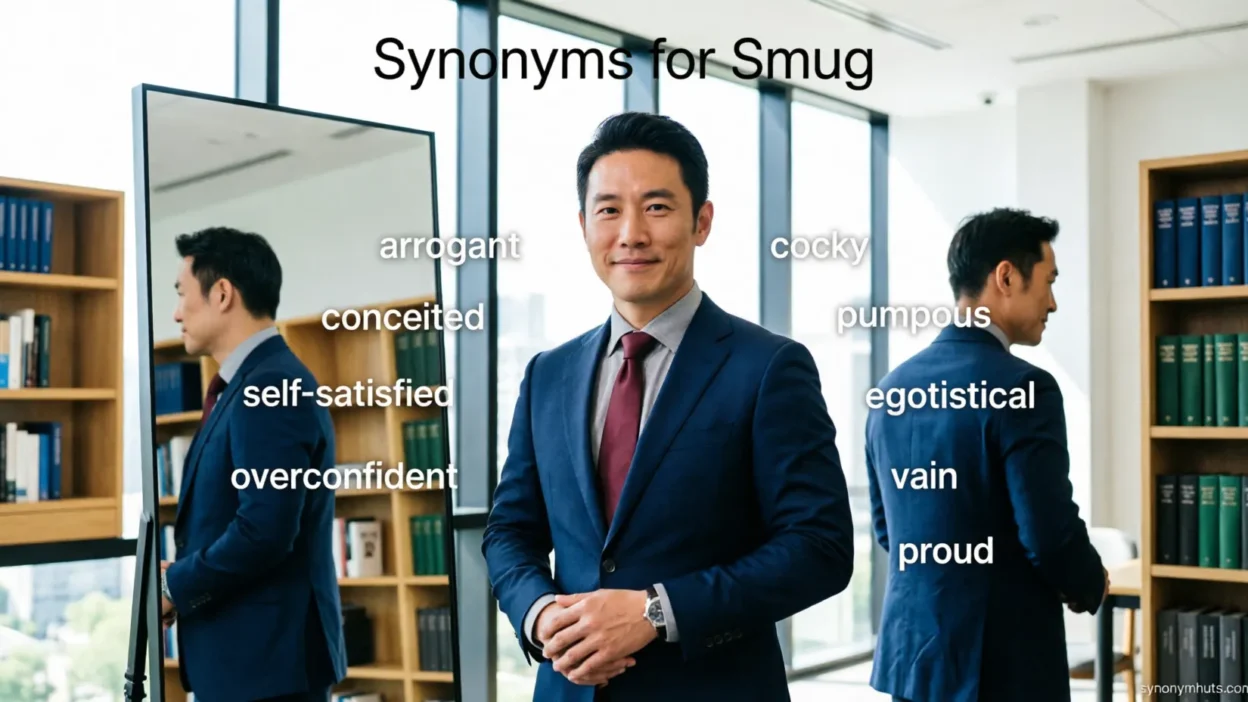
The English word smug is commonly used to describe someone who seems overly pleased with themselves or acts as if they are better than others. While it is a useful word, using the same term repeatedly can make your writing sound repetitive. Learning different synonyms for smug helps you express ideas more accurately and naturally.
Whether you are a student, an ESL learner, a writer, or a content creator, understanding similar words can improve your vocabulary and writing style. Some alternatives to smug are gentle, while others are stronger or more negative. Choosing the right word depends on the situation and the tone you want to create.
In this guide, you’ll discover 30 synonyms for smug, along with their meanings, example sentences, and the best situations in which to use them. You’ll also learn how to choose the right synonym based on context and tone.
What Does “Smug” Mean?
Simple Meaning
Smug describes a person who is too satisfied with themselves, often believing they are smarter, better, or more successful than other people.
Tone
The word usually has a negative meaning because it suggests arrogance, self-importance, or excessive pride.
Common Usage
People often use smug when describing someone who:
- Brags about their success.
- Acts superior to others.
- Looks overly confident after being right.
- Enjoys showing off their achievements.
Example:
She gave everyone a smug smile after winning the competition.
30 Synonyms for Smug
1. Arrogant
Meaning: Thinking you are better than others.
Example: He sounded arrogant during the meeting.
Best Usage Context: Formal writing and criticism.
2. Conceited
Meaning: Having an excessively high opinion of yourself.
Example: Everyone thought the actor was conceited.
Best Usage Context: Personality descriptions.
3. Self-Satisfied
Meaning: Too pleased with yourself.
Example: She looked self-satisfied after the presentation.
Best Usage Context: Everyday conversations.
4. Cocky
Meaning: Overconfident in an annoying way.
Example: His cocky attitude annoyed the team.
Best Usage Context: Informal speech.
5. Egotistical
Meaning: Thinking mostly about yourself.
Example: His egotistical behavior upset his coworkers.
Best Usage Context: Personality analysis.
6. Proud
Meaning: Feeling pleased about your achievements.
Example: She was proud of finishing the project.
Best Usage Context: Positive or neutral situations.
7. Boastful
Meaning: Always talking about your success.
Example: He became boastful after getting promoted.
Best Usage Context: Describing bragging.
8. Vain
Meaning: Caring too much about appearance or success.
Example: She seemed vain and loved compliments.
Best Usage Context: Appearance or personality.
9. Self-Important
Meaning: Believing your opinions matter more than others’.
Example: His self-important attitude frustrated everyone.
Best Usage Context: Workplace or social settings.
10. Superior
Meaning: Acting as though you are above others.
Example: She gave him a superior look.
Best Usage Context: Describing behavior.
11. Haughty
Meaning: Proud and unfriendly.
Example: The manager had a haughty expression.
Best Usage Context: Literature and formal writing.
12. Snobbish
Meaning: Looking down on people you think are less important.
Example: His snobbish behavior pushed people away.
Best Usage Context: Social class discussions.
13. Overconfident
Meaning: More confident than you should be.
Example: Being overconfident caused mistakes.
Best Usage Context: Advice and criticism.
14. Pompous
Meaning: Acting more important than you really are.
Example: His pompous speech bored the audience.
Best Usage Context: Formal criticism.
15. Patronizing
Meaning: Treating others as less intelligent.
Example: Her patronizing tone upset the students.
Best Usage Context: Conversations and communication.
16. Narcissistic
Meaning: Loving yourself excessively.
Example: The character appeared narcissistic.
Best Usage Context: Psychology and personality discussions.
17. Egocentric
Meaning: Thinking mostly about your own needs.
Example: Children can sometimes seem egocentric.
Best Usage Context: Educational writing.
18. Pretentious
Meaning: Trying to appear more impressive than you are.
Example: His pretentious comments sounded fake.
Best Usage Context: Lifestyle and reviews.
19. Self-Assured
Meaning: Confident in yourself.
Example: She remained self-assured during the interview.
Best Usage Context: Positive confidence.
20. Confident
Meaning: Believing in your abilities.
Example: He felt confident before the exam.
Best Usage Context: Positive situations.
21. Bold
Meaning: Fearless and willing to act.
Example: She made a bold decision.
Best Usage Context: Positive achievements.
22. Insolent
Meaning: Rude and disrespectful.
Example: His insolent reply shocked everyone.
Best Usage Context: Formal criticism.
23. Domineering
Meaning: Trying to control others.
Example: The boss became domineering.
Best Usage Context: Leadership discussions.
24. Imperious
Meaning: Commanding and arrogant.
Example: She spoke in an imperious voice.
Best Usage Context: Formal or literary writing.
25. Disdainful
Meaning: Showing strong dislike and superiority.
Example: He gave a disdainful laugh.
Best Usage Context: Emotional descriptions.
26. Superior-Minded
Meaning: Believing you are intellectually better.
Example: His superior-minded attitude hurt friendships.
Best Usage Context: Academic discussions.
27. Swaggering
Meaning: Walking or acting with excessive confidence.
Example: He entered with a swaggering smile.
Best Usage Context: Storytelling.
28. Grandiose
Meaning: Having an exaggerated opinion of yourself.
Example: His grandiose plans seemed unrealistic.
Best Usage Context: Psychology and writing.
29. Puffy
Meaning: Acting overly proud.
Example: He became puffy after receiving praise.
Best Usage Context: Informal conversation.
30. Smarmy
Meaning: Fake, overly polite, and self-satisfied.
Example: His smarmy compliments felt dishonest.
Best Usage Context: Informal criticism.
Comparison Guide: When to Use Different Synonyms
Quick Comparison Table
| Synonym | Strength | Tone | Best Used For |
|---|---|---|---|
| Smug | Medium | Negative | General conversations |
| Arrogant | Strong | Negative | Formal criticism |
| Conceited | Medium | Negative | Personality descriptions |
| Cocky | Medium | Informal | Sports, friends |
| Boastful | Medium | Negative | Talking about bragging |
| Proud | Mild | Positive | Achievements |
| Confident | Mild | Positive | Professional writing |
| Self-Assured | Mild | Positive | Leadership |
| Haughty | Strong | Formal | Literature |
| Pretentious | Strong | Negative | Reviews and opinions |
How to Choose the Right Synonym
If You Mean Someone Is Simply Confident
Use:
- Confident
- Self-Assured
- Bold
- Proud
These words usually have a positive meaning.
If You Want to Show Mild Negativity
Use:
- Cocky
- Self-Satisfied
- Boastful
- Conceited
These suggest someone is a little too proud.
If You Want Strong Criticism
Use:
- Arrogant
- Haughty
- Pompous
- Narcissistic
- Pretentious
- Imperious
These describe serious arrogance or superiority.
If You Are Writing Stories
Good choices include:
- Swaggering
- Smarmy
- Disdainful
- Superior
- Patronizing
These help create vivid characters.
Common Mistakes When Using “Smug”
Confusing Smug with Confident
Confidence is generally positive.
Smugness usually annoys other people because it includes feelings of superiority.
Using Strong Synonyms Incorrectly
Words like narcissistic or imperious are much stronger than smug. Use them only when they truly fit the person’s behavior.
Ignoring Context
A business report may require arrogant, while a casual conversation might sound better with cocky or conceited.
Why Learning Synonyms for Smug Matters
Better Writing
Using different words keeps your writing fresh and interesting.
Improved Speaking
You’ll sound more natural and express ideas more accurately.
Better Understanding
Knowing subtle differences helps you understand books, articles, movies, and conversations more easily.
FAQs:
What is the closest synonym for smug?
Self-satisfied, conceited, and arrogant are among the closest synonyms.
Is smug always negative?
Yes. It almost always describes excessive pride or superiority.
What’s the difference between smug and confident?
A confident person believes in themselves without putting others down. A smug person often acts superior.
Is cocky the same as smug?
They are similar, but cocky focuses more on overconfidence, while smug emphasizes self-satisfaction.
Which synonym is best for formal writing?
Arrogant, conceited, haughty, and pompous work well in formal contexts.
Which synonyms are positive?
Confident, self-assured, bold, and proud have positive meanings when used appropriately.
Conclusion
Learning synonyms for smug helps you communicate with greater precision and variety. While smug describes someone who is overly pleased with themselves or acts superior, many alternatives express different levels of confidence, pride, or arrogance. Some words, like confident and self-assured, have positive meanings, while others, such as arrogant, conceited, and pompous, carry stronger criticism.
By understanding each synonym’s meaning, example, and best usage context, you can choose the most accurate word for your writing or conversations. Expanding your vocabulary not only improves your English skills but also makes your communication more engaging, natural, and effective.

Abigail Alice is a passionate language writer and content creator at SynonymHuts.com, specializing in synonyms, vocabulary, word meanings, grammar tips, and easy-to-understand language resources for students, writers, and English learners.